Book Now for 2026: Uganda Safari Dates Filling Fast!
August 10, 2025
How to book gorilla trekking permit?
March 3, 2026
Photography Tips for Gorilla Trekking: Capturing the Magic of the Mountain Gorillas
Few wildlife experiences in the world compare to standing just meters away from a family of mountain gorillas in the misty forests of Uganda, Rwanda, or the Democratic Republic of Congo. Their expressive eyes, human-like gestures, and gentle nature make for unforgettable memories — and extraordinary photographs.
But photographing gorillas isn’t easy. You’ll be working in dense rainforest, low light, and unpredictable conditions, often after a challenging trek. To help you make the most of this once-in-a-lifetime experience, here are expert photography tips for gorilla trekking that will help you capture the beauty and emotion of the moment.
1. Know the Rules — Respect Comes First
Before you even lift your camera, it’s essential to understand and follow the gorilla trekking guidelines. These rules are designed to protect both you and the gorillas, ensuring a safe and ethical encounter. Always maintain a distance of at least 7–10 meters (about 23–33 feet) from the gorillas — this not only helps prevent the spread of human-borne diseases, to which they are highly vulnerable, but also minimizes stress on the animals. Flash photography is strictly prohibited, as sudden bursts of light can startle or irritate the gorillas, especially infants. During the trek, remain calm, quiet, and composed — move slowly, avoid sudden gestures, and allow the rangers to position you safely for the best view. The guides know the gorillas’ personalities and behaviors well, so following their instructions ensures both safety and great photographic opportunities. Ultimately, photographing gorillas is not about intrusion but about observation, patience, and respect for these magnificent creatures in their natural habitat.
2. Pack the Right Gear
Gorilla trekking takes you deep into humid, mountainous forests, so packing the right photography gear is essential. A DSLR or mirrorless camera with good low-light performance is ideal for the shaded jungle. Pair it with a 70–200mm telephoto lens for close-ups without getting too near, and a 24–70mm lens for environmental and storytelling shots. Fast lenses with apertures like f/2.8 or f/4 are best for the dim forest light. Since you’ll be out for hours, bring extra batteries and memory cards — there are no charging points in the wild. Keep a lens cloth or wipes handy to clear mist or humidity from your gear, and pack a waterproof camera cover or dry bag to protect against sudden rain. If you prefer traveling light, a high-end compact camera like the Sony RX10 IV or a mirrorless camera with a zoom lens can deliver stunning results without weighing you down.
3. Master the Light
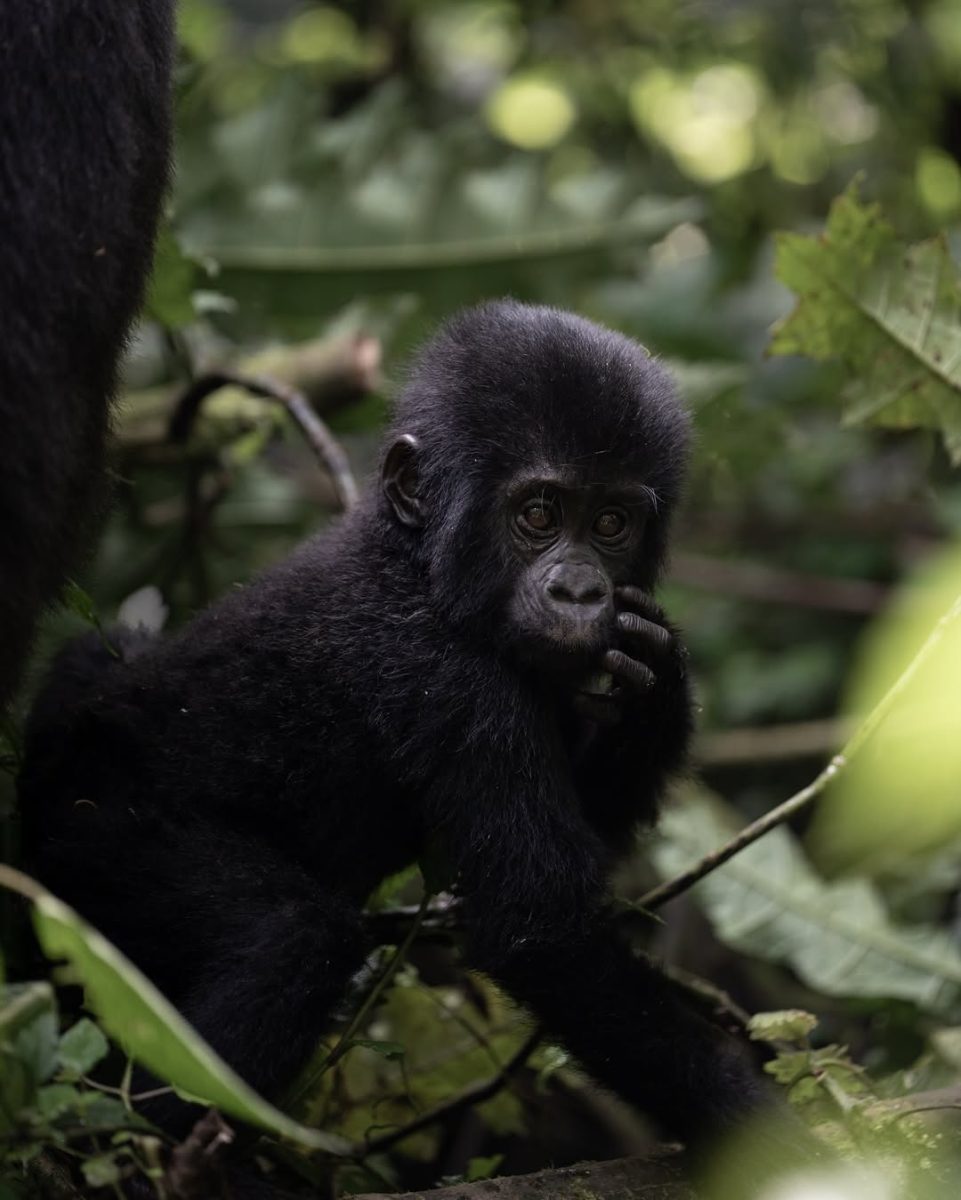
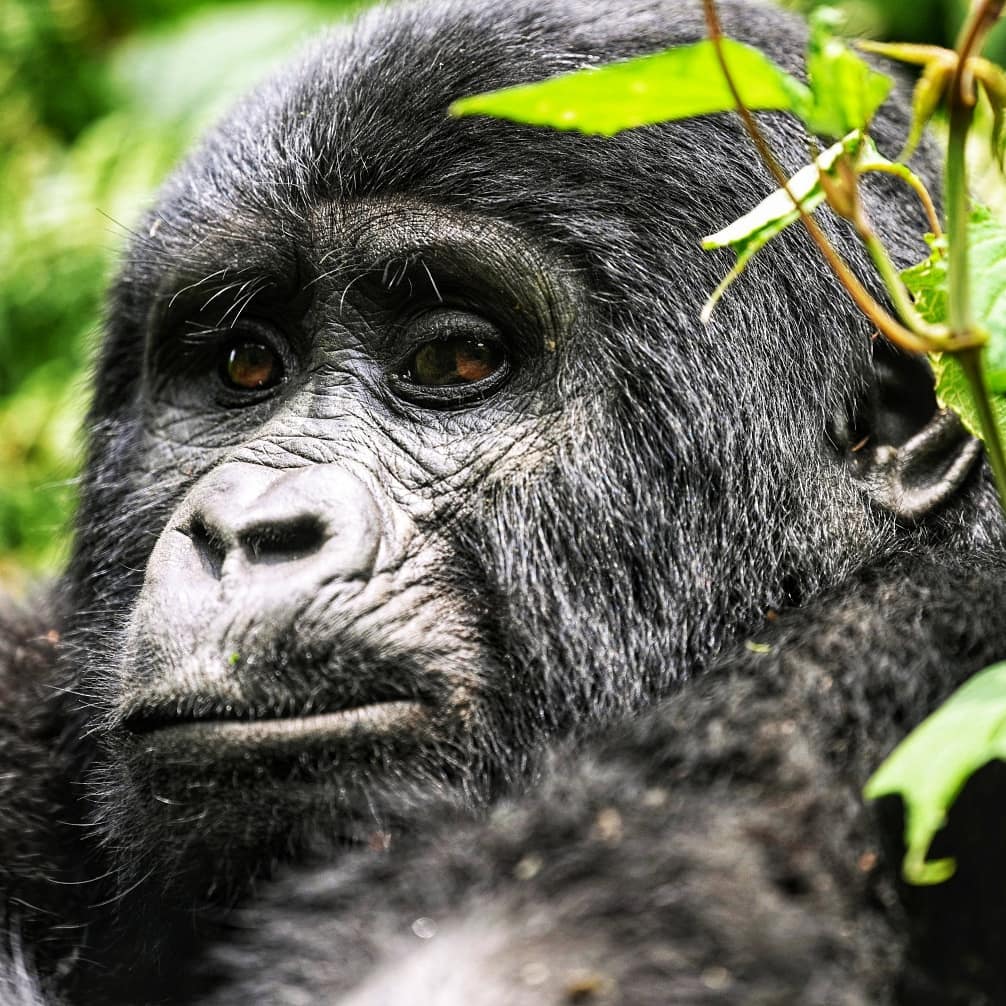
Lighting is one of the biggest challenges in gorilla photography. The rainforest canopy filters sunlight into soft, dappled light — beautiful, but often inconsistent. To handle low-light conditions, increase your ISO (800–3200) to avoid blurry shots while keeping shutter speeds fast enough for moving subjects. Shoot in RAW format so you can fine-tune exposure and white balance later in post-processing. A wide aperture (f/2.8–f/4) lets in more light and produces a creamy, blurred background that makes your subject stand out. Be cautious when photographing silverbacks; their dark fur can trick your camera’s light meter, so it’s often best to slightly underexpose your shots. Interestingly, overcast and misty conditions — common in mountain forests — create beautifully diffused lighting that enhances the mood and atmosphere of your images.
4. Be Ready — Moments Happen Fast
You only get one magical hour with the gorillas, and time moves quickly in their presence. Gorillas may be feeding, grooming, or resting, and before you know it, they can disappear into the foliage. To make the most of every second, set your camera settings before you reach them — adjust your ISO, shutter speed, and focus mode in advance. Use burst mode or continuous shooting to capture quick movements or emotional expressions in a series of frames. Observe the gorillas closely and anticipate their actions — a juvenile might suddenly climb a tree, or a mother might tenderly hold her infant. Sometimes, the most powerful photos come when you lower your camera for a moment, observe quietly, and anticipate the story unfolding in front of you.
5. Composition: Tell a Story, Not Just a Snapshot
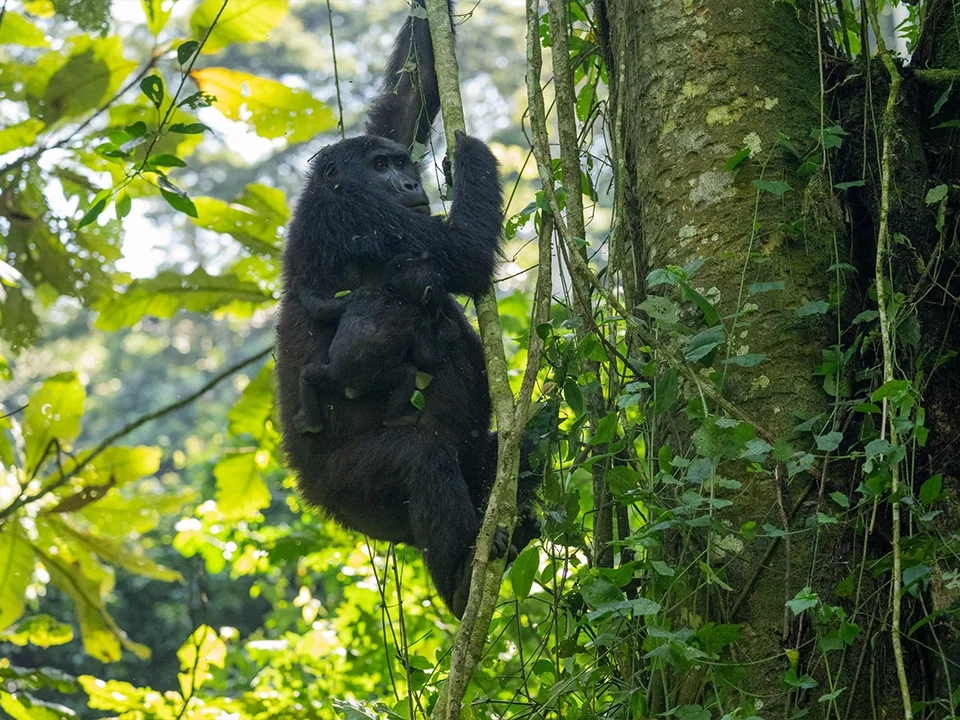
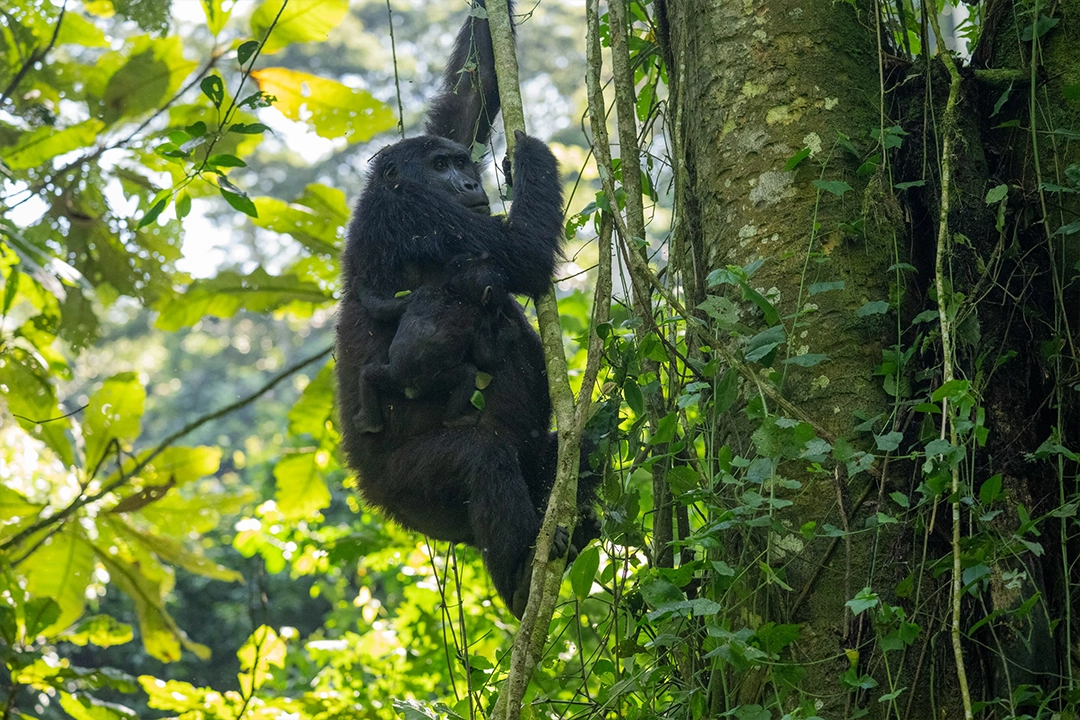
Great wildlife photography is about storytelling. When photographing gorillas, focus on their expressions and emotions — the eyes, especially, reveal intelligence, curiosity, and warmth. Frame your shots creatively by including the environment: the misty forest, the tangled vines, or shafts of light filtering through the canopy. Capture interactions between family members — a baby clinging to its mother, siblings playfully wrestling, or a dominant silverback surveying his troop. Use natural lines, such as tree trunks or vines, to guide the viewer’s gaze toward your subject. Vary your shots by capturing both intimate close-ups and wide environmental portraits that showcase the gorillas in their breathtaking jungle home.
6. Prepare for the Trek
Photographing gorillas isn’t just about your camera — it’s also a physical challenge. The trek can take anywhere from two to six hours through steep, muddy, and uneven terrain. Dress appropriately in waterproof hiking boots, gaiters, and quick-dry clothes. Pack a light rain jacket and bring a comfortable daypack with a rain cover to protect your gear. Hiring a porter is highly recommended — they’ll carry your equipment, give you stability on slippery trails, and directly support the local community. Inside your backpack, wrap your camera in a soft cloth or store it inside a dry bag to shield it from moisture and mud. Preparation ensures you’ll be ready to focus on your photography rather than your footing.
7. Practice Before You Go
If you’re new to wildlife photography, a bit of practice can make all the difference. Before your trek, spend time photographing animals at a local zoo or wildlife park to get comfortable shooting in low light and capturing movement. Learn to use your camera’s manual settings quickly — switching between ISO, aperture, and shutter speed without hesitation. Practice using autofocus tracking modes, especially for moving subjects. The more familiar you are with your camera, the more confident and efficient you’ll be when your once-in-a-lifetime moment arrives in the rainforest.
8. Capture, Don’t Disturb
Above all, remember that gorilla trekking is a privilege, not a right. Every photo you take should honor the gorillas and their environment. Avoid loud noises, sudden movements, or anything that could disturb them. Respect the one-hour viewing limit — it’s there to minimize human impact. Use your photography as a force for good by sharing your images to raise awareness and inspire conservation. As Dian Fossey, the legendary primatologist, once said, “When you realize the value of all life, you dwell less on what is past and concentrate on the preservation of the future.” Your photos can become part of that preservation story.
Final Thoughts
Photographing gorillas is far more than just taking pictures — it’s an intimate exchange with one of nature’s most extraordinary species. When you lock eyes with a silverback or witness the tenderness between a mother and her baby, you feel an unspoken connection — a reminder of our shared ancestry and responsibility. Every frame you capture tells a story of resilience, survival, and hope. Approach your trek with patience, humility, and heart, and your photographs will reflect not just what you saw, but what you felt — the awe of standing face-to-face with the wild.